
Labs & Studios

Courage
Craftsmanship
Stewardship
Where Applied Inquiry becomes hands-on
Students move from questions to experiments, models, prototypes, films, presentations, designs and demonstrations.
QUICK PROOF POINTS
- Science labs
- AI & robotics
- Engineering
- Media & film
- Art & design
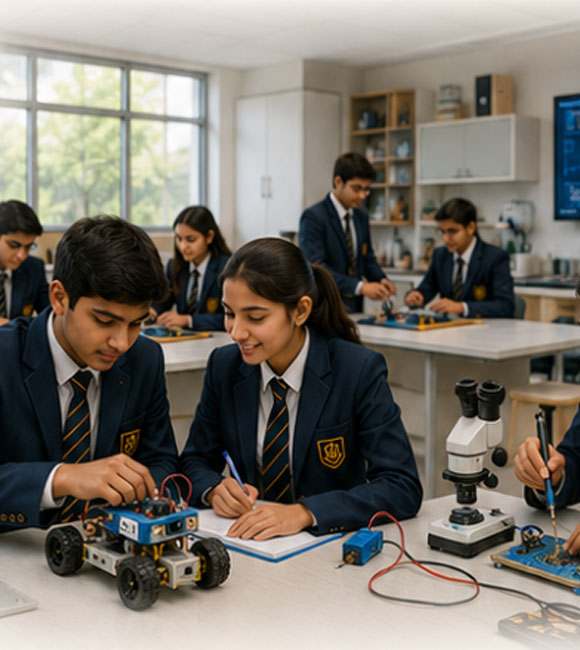
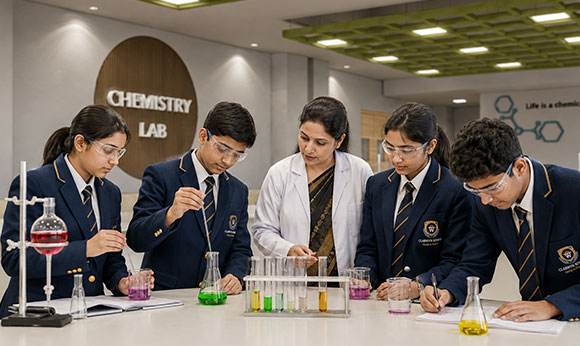
Science labs
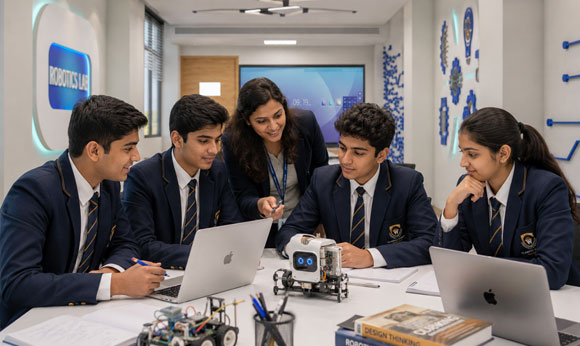
AI & robotics
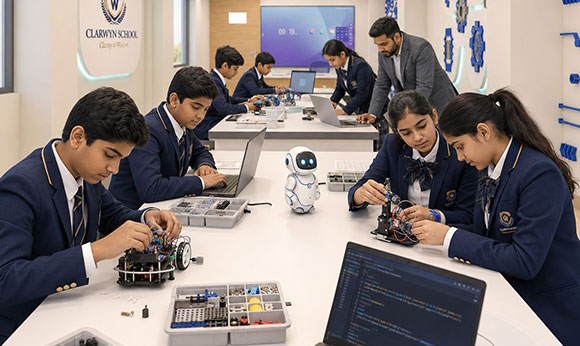
Engineering
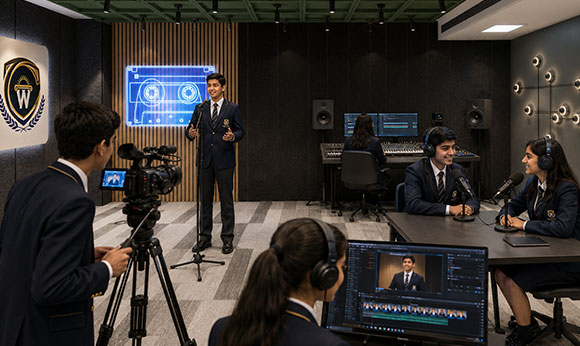
Media & film
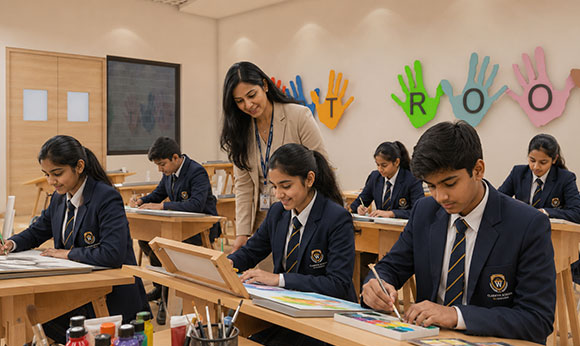
Art & design
Science and subject labs
Labs help students make abstract concepts visible.
Physics
Measurement, motion, force, energy, observation and explanation.
Chemistry
Reactions, materials, properties, safety, precision and evidence.
Biology
Living systems, observation, environment, classification and inquiry.
Mathematics
Models, patterns, logic, data and real-life applications.
Social science
Maps, timelines, civic ideas, cultures and human systems.
Innovation studios
Students learn by building, testing and presenting.
Robotics and AI
Automation, sensors, coding logic and problem-solving.
Engineering and design
Prototypes, models, materials, constraints and iteration.
Coding and computing
Digital tools, computational thinking and product creation.
Media and film
Photography, video, editing, storytelling and responsible publication.
Innovation hub
Interdisciplinary projects, challenges and applied demonstrations.
What students produce
Hands-on learning should leave visible evidence.
Models and prototypes
Working objects that show how an idea behaves.
Data stories
Charts, explanations and interpretations that make evidence understandable.
Films and presentations
Clear communication for real audiences.
Demonstrations
Students show, explain, revise and share what they learned.
Complete facility clusters
| Cluster | Facilities to list on the page | What students do |
|---|---|---|
| Science Laboratories | Physics Lab | Chemistry Lab | Biology Lab | Observe, measure, test, record, compare and explain scientific evidence. |
| Subject Laboratories | Mathematics Lab | English & Communication Lab | Social Science Lab | Use models, language, maps, timelines, data, discussion and subject-specific application. |
| Technology & Engineering | AI & Robotics Lab | Technology Lab | Engineering Lab | Computer/Coding Lab | STEM Activities Lab | Innovation/Venture Studio | Design, code, build, prototype, test, debug, improve and justify decisions. |
| Creative & Media Studios | Multimedia | Photography | Film | Content Creation | Recording | Plan, capture, edit, credit, present and publish responsibly. |
| Visual Arts & Making | Canvas Painting | Drawing & Calligraphy | Pottery & Sculpture | Visual Art & Digital Design | Mixed Media & Craft | Art Gallery | Observe, practise technique, revise, make, curate and explain creative choices. |
The practical-learning standard
Observe
Notice accurately and connect the practical setting to taught knowledge.
Measure
Use appropriate tools, units, records and procedures.
Test
Investigate a question, variable, material, design or method under guidance.
Record
Capture data, notes, images, diagrams, code, process and observations honestly.
Explain
Interpret the evidence, communicate conclusions and identify limitations.
Improve
Respond to feedback, repeat where necessary and refine the final output.
What families should notice
Practical work connected to curriculum rather than isolated demonstrations
Trained supervision and age-appropriate access
Student records, models, prototypes and explanations
Revision after testing or feedback
Portfolio evidence that shows both process and outcome