
Technology & Innovation

Courage
Craftsmanship
Stewardship
Technology that turns questions into working outputs
Technology at Clarwyn is a natural extension of Applied Inquiry: students ask, design, build, test, explain and improve.
QUICK PROOF POINTS
- AI & robotics
- Coding
- Data stories
- Media production
- Design thinking
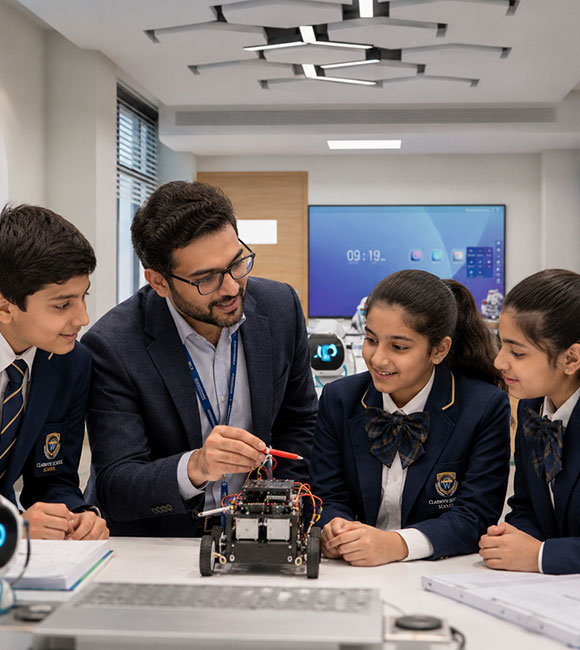
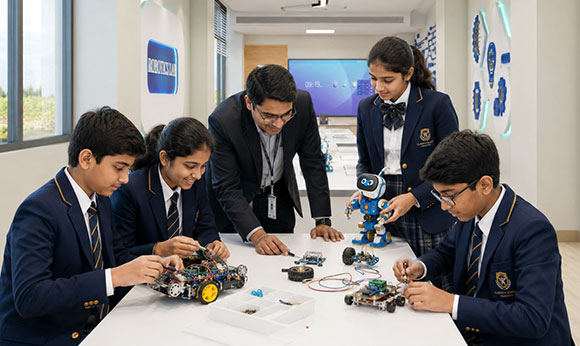
AI & robotics
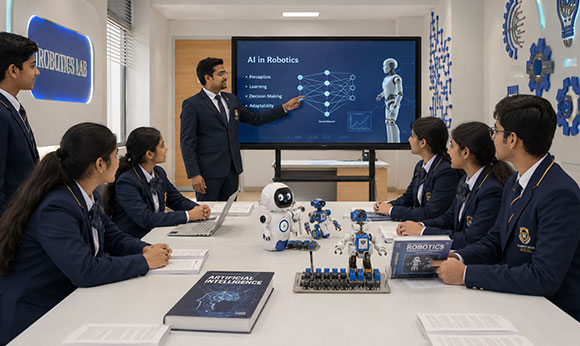
Coding
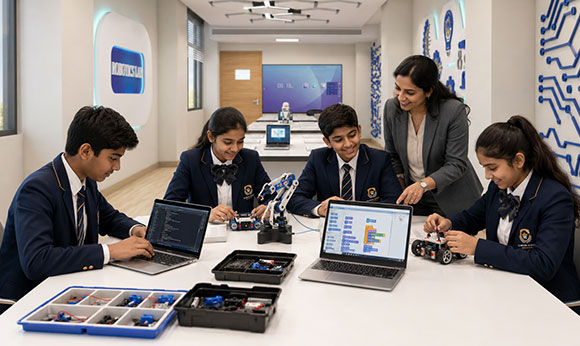
Data stories
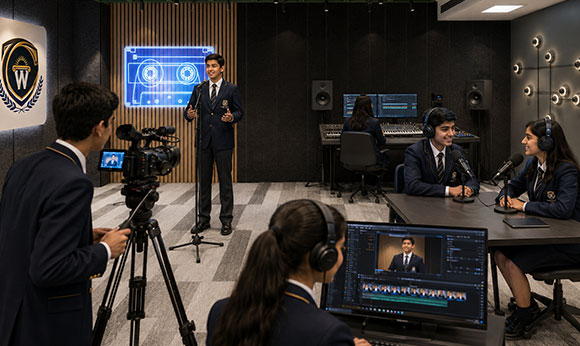
Media production
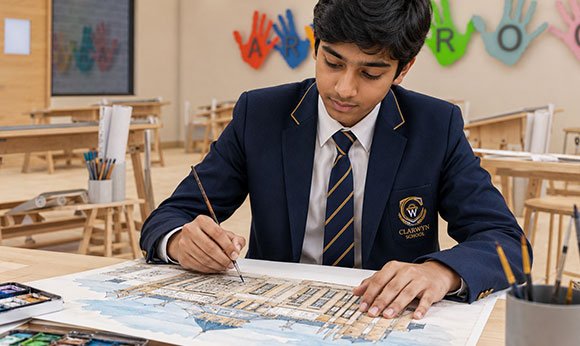
Design thinking
Future-skills spaces
The campus supports technology learning through varied specialised spaces.
AI & Robotics
Students explore automation, sensors, robotics logic and practical problem-solving.
Coding & computing
Programming, computational thinking, digital design and responsible technology use.
Media and film
Photography, video, audio, editing, digital storytelling and presentation.
Data and design
Students turn information into patterns, explanations, models and visual stories.
Build-test-explain
Digital learning is strongest when it leads to visible thinking and working outputs.
Ask
Students begin with a question, challenge or problem worth exploring.
Design
They plan models, code, circuits, films, prototypes or data displays.
Build
Students create with tools, materials and digital platforms.
Test
They check whether the work performs, communicates or solves a problem.
Explain
Students present what they made, why it works and what they would improve.
Responsible use
Technology is used with care, not as decoration.
Safety
Students learn digital etiquette, privacy and responsible tool use.
Purpose
Tools are chosen for thinking, making, research, communication or improvement.
Evidence
Models, code, circuits, prototypes, films and data stories show application.
Reflection
Students learn to refine their work after feedback and testing.
Purposeful technology pathways
| Pathway | What learners do | Visible output |
|---|---|---|
| AI & Robotics | Explore automation, sensors, robotics logic, data, control and practical problem-solving. | Robot behaviour, tested sequence, control explanation or design improvement. |
| Engineering & Design | Work with materials, constraints, mechanisms, structures, models and iterative improvement. | Prototype, engineering drawing, test record or design justification. |
| Technology & STEM | Connect mathematics, science, coding and making through structured challenges. | Working model, investigation, measurement record or demonstration. |
| Coding & Computing | Develop computational thinking, programming, debugging and responsible digital creation. | Program, interactive product, simulation or code explanation. |
| Multimedia, Photography & Film | Plan, capture, edit and communicate through image, audio, video and digital storytelling. | Film, podcast, photo essay, digital presentation or showreel. |
| Data & Visual Communication | Collect, organise, interpret and communicate information clearly. | Data story, chart, dashboard, infographic or evidence-based presentation. |
Responsible digital practice and AI literacy
Technology is valuable when it extends thinking, making, research, communication or access. It remains subordinate to human judgement, foundational learning and responsible relationships.
Purpose before platform
Every tool is selected for a defined learning purpose rather than novelty or screen time.
Privacy and safety
Students learn age-appropriate digital etiquette, privacy, safe search and responsible account use.
Verification
Digital and AI-generated output is checked for accuracy, evidence, bias and relevance.
Attribution and disclosure
Students credit sources and disclose meaningful tool or AI assistance where required.
Human responsibility
The learner remains responsible for the final reasoning, decision, creation and explanation.
Balance
Reading, writing, discussion, movement, real materials and human feedback are not replaced by technology.
Stage progression
Foundation Years
Adult-guided audio, image, storytelling, documentation and simple creative tools remain bounded by strong talk, movement, play and real materials.
Grades I-II
Learners build basic creation, coding patterns, safe search habits and awareness that digital output may be wrong or incomplete.
Grades III-V
Coding, robotics, media, source checking, privacy, attribution and teacher-controlled AI demonstrations become more structured.
Grades VI-VII
Learners work with data, design, research, AI literacy, prompt critique, verification, disclosure and responsible independent creation within school policy.
What families should notice
Technology leading to visible outputs rather than passive screen time
Children building, testing and explaining—not merely operating devices
Clear age boundaries and privacy expectations
Human feedback and source verification
A balance of digital and non-digital thinking