
Faculty & Teacher Learning

Craftsmanship
Mastery
Curiosity
Stewardship
ADULTS LEARN FIRST
Teaching quality is selected, rehearsed, coached, moderated and reviewed.
Clarwyn’s Teacher Learning Academy connects recruitment, induction, Praxis training, planning, microteaching, coaching, moderation and professional growth. Adults experience the kind of purposeful, evidence-rich learning they are expected to create for students.
QUICK PROOF POINTS
- Praxis induction and planning clinics
- Microteaching and model lessons
- Coaching and feedback
- Work moderation and calibration
- Evidence-based professional growth


Praxis induction and planning clinics

Microteaching and model lessons
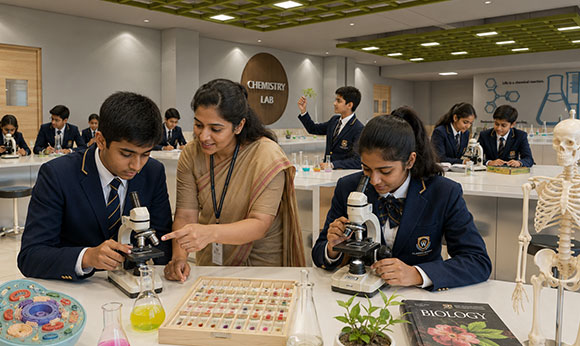
Coaching and feedback
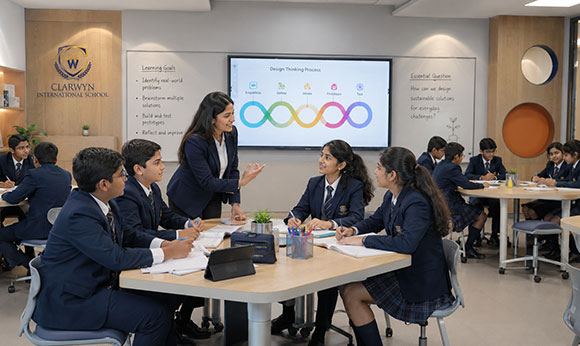
Work moderation and calibration

Evidence-based professional growth
2026-27 DEEPER LEARNING ALLIANCE
Adult learning that strengthens the Clarwyn Praxis
Clarwyn’s leadership team is part of the 2026-27 Deeper Learning Alliance, a year-long professional community guided by the Deeper Learning Institute, a project of the Harvard Graduate School of Education. Clarwyn’s work in the Alliance focuses on translating the Clarwyn Praxis from a founding framework into a teacher-ready operating system – strengthening teacher planning, professional learning, classroom practice, student evidence and continuous improvement.
Coherence & emergence
Protect shared direction without forcing every teacher, subject or age group into mechanical uniformity.
Equity
Design rigorous and meaningful learning so access does not depend on confidence, visibility, language or family resources.
Symmetry
Adults learn through modelling, inquiry, practice, application, feedback and reflection before being asked to create those experiences for students.
Co-design
Teachers help test and refine planning tools, stage adaptations, exemplars and workload expectations so the system becomes usable and owned.
HOW THE SYSTEM WORKS
From professional learning to classroom evidence
Understand the standard
Teachers study the Graduate Profile, Core Curriculum, Praxis, assessment expectations, relationship responsibilities and examples of quality.
Practise before independence
Planning clinics, rehearsal, microteaching, model lessons and peer feedback make expectations usable before full classroom responsibility.
Apply, study and improve
Leaders examine lesson evidence, student work, feedback response, application, workload and learner explanation; coaching then defines the next step.
FOR YOUR CHILD AND FAMILY
What should become visible
Teachers using a shared planning and feedback language
Clearer expectations without mechanical sameness
Adults prepared for learning, relationship and support responsibilities
Practice reviewed through coaching, student work and evidence