
Atheneum Library & Research

Courage
Craftsmanship
Stewardship
A library where inquiry begins quietly.
The Atheneum is one of the first homes of Applied Inquiry. Students read deeply, ask carefully, use sources honestly and explain with clarity.
QUICK PROOF POINTS
- Reading
- Research
- Source use
- Quiet study
- Collaboration
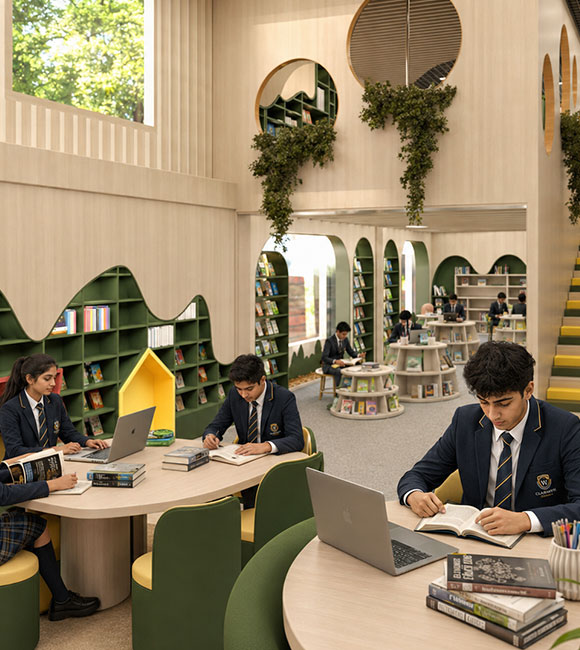
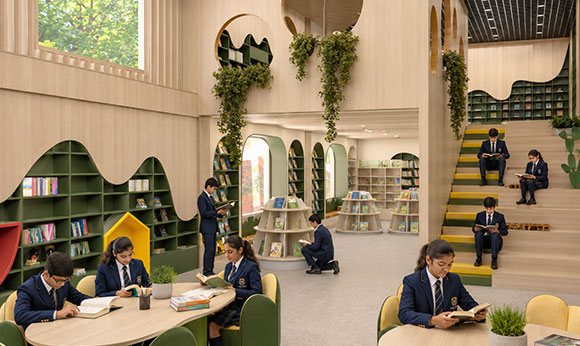
Reading
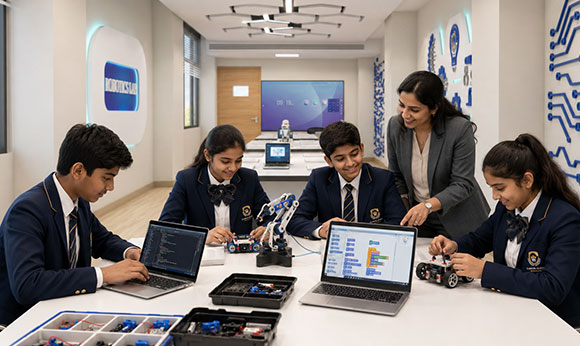
Research
Quiet study
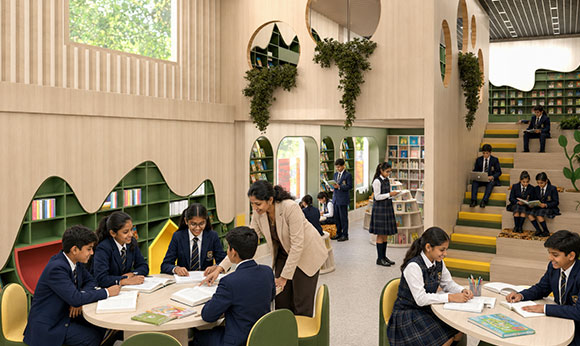
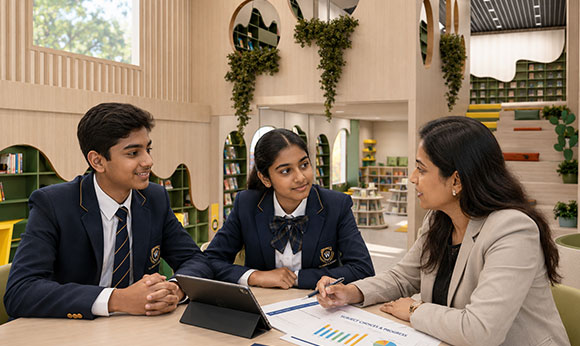
Collaboration
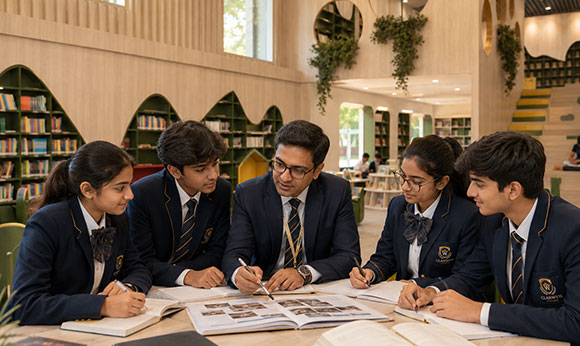
Collaboration
The Atheneum experience
A strong library culture builds thinking before it asks for performance.
Reading
Curated collections spark curiosity, vocabulary, comprehension and empathy.
Research
Students learn to ask useful questions, search responsibly and compare sources.
Quiet study
Calm spaces support concentration, reflection and independent work.
Collaboration
Discussion tables and group tasks help students learn from one another.
Academic integrity
Students practise honest source use, credit and careful explanation.
Research habits
Library learning strengthens the skills behind Applied Inquiry.
Ask
Turn curiosity into a focused research question.
Find
Locate books, references, databases and reliable digital material.
Evaluate
Check accuracy, relevance, authorship and usefulness.
Explain
Present ideas clearly in writing, discussion, display or portfolio work.
A space for every reader
Reading culture should include both confidence and choice.
Junior readers
Storytelling, picture reading and early research support the Foundation Years.
Middle years
Subject collections, projects and discussion strengthen independence.
Senior readers
Research material, reference collections and study routines support depth.
Displays
Student work and reading recommendations celebrate ideas worth sharing.
Progression from reading choice to research independence
Foundation Years
Storytelling, picture reading, vocabulary, book care, listening and early research through talk and observation.
Grades I-II
Reading choice, simple questions, labelled information, oral retelling and early note-making.
Grades III-V
Focused questions, source comparison, note-making, reference use, discussion and independent reading projects.
Grades VI-VII
Research planning, evidence selection, fair citation, source evaluation, synthesis and audience-ready explanation.
Visible outputs
Reading journals and recommendations
Research questions and source notes
Annotated texts, maps and timelines
Bibliographies and fair citation
Presentations, displays, essays and portfolio evidence