
Mentor Circle

Clarity
Courage
Courtesy
Stewardship
A PROTECTED RECURRING RELATIONSHIP PRACTICE
A stable group. A responsible adult. A clear route to help.
Mentor Circle gives belonging, organisation, self-knowledge, values in action, student voice and help-seeking a planned home in the school week. It is relational and preventive, while remaining clear about professional boundaries and referral.
QUICK PROOF POINTS
- Weekly protected rhythm
- Known adult by stage
- Periodic individual check-ins
- Six-step session structure
- Clear referral boundaries
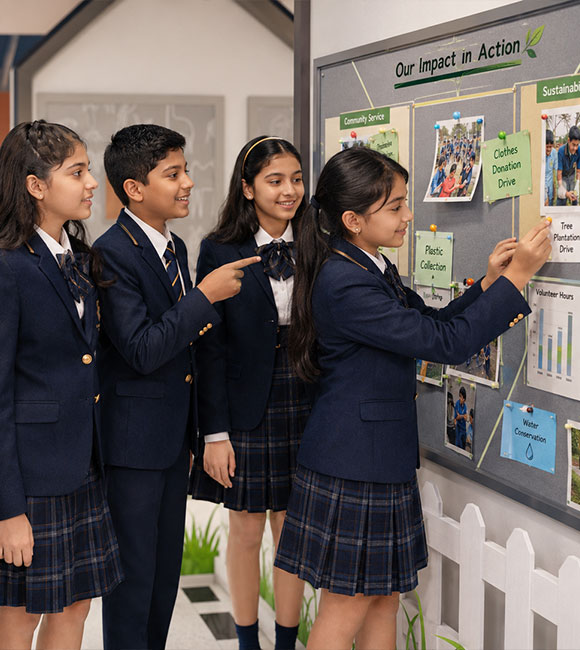

Weekly protected rhythm

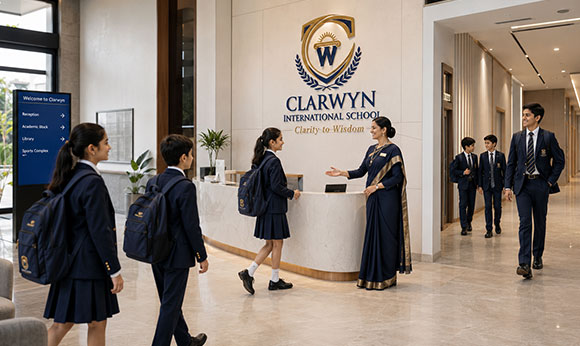
Known adult by stage
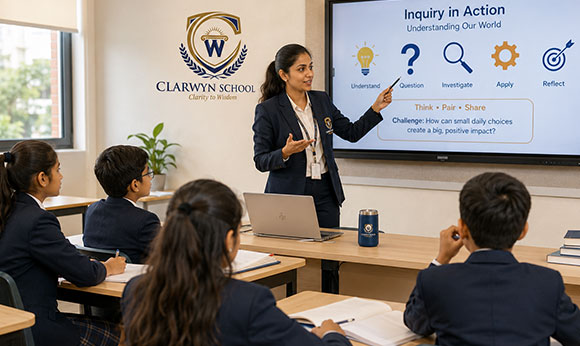
Periodic individual check-ins
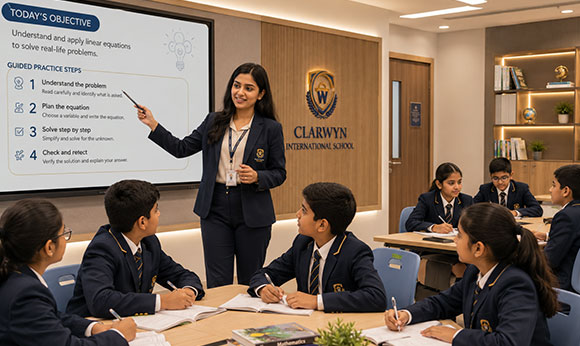
Six-step session structure
Clear referral boundaries
WHAT THIS MEANS IN PRACTICE
Four clear commitments
Six practice strands
Belonging and group norms; learning habits and goals; Wisdom Compass in action; student voice and respectful choice; help-seeking and safety literacy; service, leadership and reflection.
Session rhythm
Arrive and check in → connect → explore → practise → commit → close and route support.
Stage model
Pre-K to Grade III use class-community or Mentor Circle routines led by the class/mother teacher. Grades IV-VII use a stable group led by a designated trained adult, with periodic one-to-one check-ins.
Help-seeking language
‘I need help with ____. I have already tried ____. I am worried or unsure because ____. Can we ____?’
THE COMPLETE EXPLANATION
How the system works
Professional boundary
Mentor Circle is not counselling, therapy, discipline processing, investigation or secret-keeping. Serious safeguarding, medical or crisis concerns move immediately to the correct professional route.
Connection to Relationship Mapping
Mentor Circle provides a designated relationship; mapping checks whether the learner would actually approach an adult for help.
Connection to Every Child Known
Concerns that require action move to one documented owner, an appropriate route and a review date.
RESEARCH & PRACTICE PARTNERSHIP
Making Caring Common
In partnership with Making Caring Common, a project of the Harvard Graduate School of Education, through the Caring Schools Network.
Making Caring Common resources strengthen Caring Community Learning, Mentor Circle, Adult-to-Student Relationship Mapping, student voice and the continuous review of Every Child Known.
The partnership strengthens implementation of Clarwyn’s caring-community and relationship systems; it is not presented as certification or approval of Clarwyn’s complete proprietary architecture.

FOR YOUR CHILD AND FAMILY
What should become visible
A predictable adult and peer group
Practice in asking for help
Goals and habits reviewed over time
Belonging that is designed but also checked