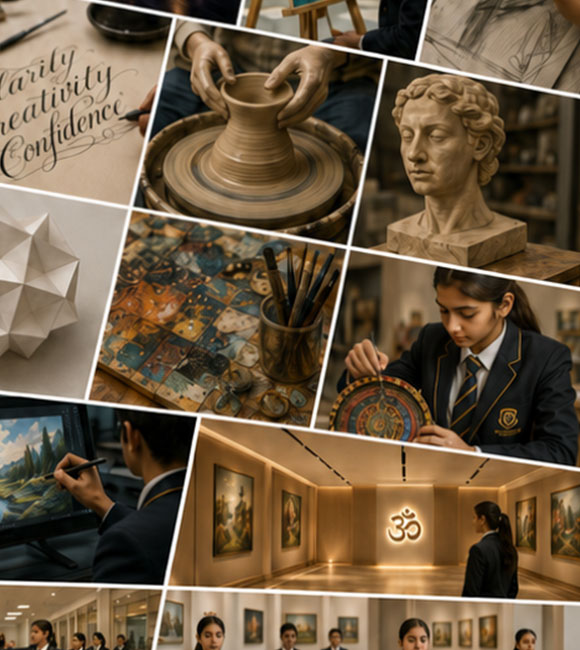
Applied Inquiry Studio

Curiosity
Courage
Craftsmanship
Stewardship
SIGNATURE PROGRAMME
Where taught knowledge becomes usable.
Applied Inquiry Studio is a recurring learning experience in which students use taught knowledge and skills to investigate, design, make, test and explain.
THE STUDIO MODEL AT A GLANCE
- Regular learning rhythm
- Curriculum-linked questions
- Investigation, design and making
- Critique and revision
- Portfolio evidence
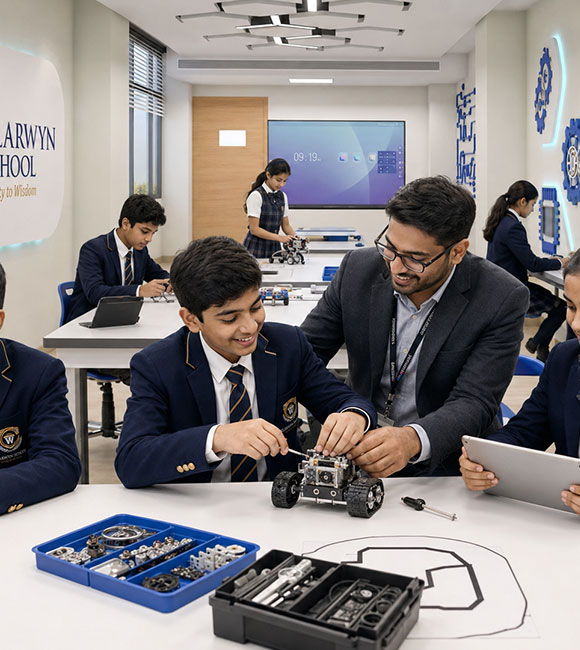

Regular learning rhythm

Curriculum-linked questions

Investigation, design and making

Critique and revision

Portfolio evidence
WHAT EVERY STUDIO CYCLE REQUIRES
Design standards, age progression, outputs and clear boundaries
How each Studio cycle works
Each cycle begins with clear curriculum goals and a focused question, followed by guided practice, appropriate tools, safe participation and a defined piece of work.
Stage progression
Foundation uses short play and observation cycles; primary adds structured investigation and making; Grades III-VII increase research, data, prototyping, source use and critique.
Core outputs
A tested explanation, investigation, design, model, decision, performance or other applied response.
What it is not
Not a free activity period, generic innovation class, unstructured maker time or exhibition rehearsal.
INSIDE A STUDIO CYCLE
Praxis, critique, public work and portfolio evidence from start to finish
Praxis in full
Understand → Question → Practise → Apply → Reflect, with particular emphasis on transfer and revision.
Sharing completed work
Students refine and fact-check selected work before presenting it to an appropriate audience.
Student explanation
Learners explain the curriculum idea, method, evidence, decisions, feedback and improvement behind their work.
WHAT STUDENTS SHOULD EXPERIENCE IN STUDIO
A meaningful problem, time to improve and work they can explain
- A meaningful problem grounded in taught knowledge
- Time to test and improve
- A visible individual contribution
- Work that can be explained, not only displayed