
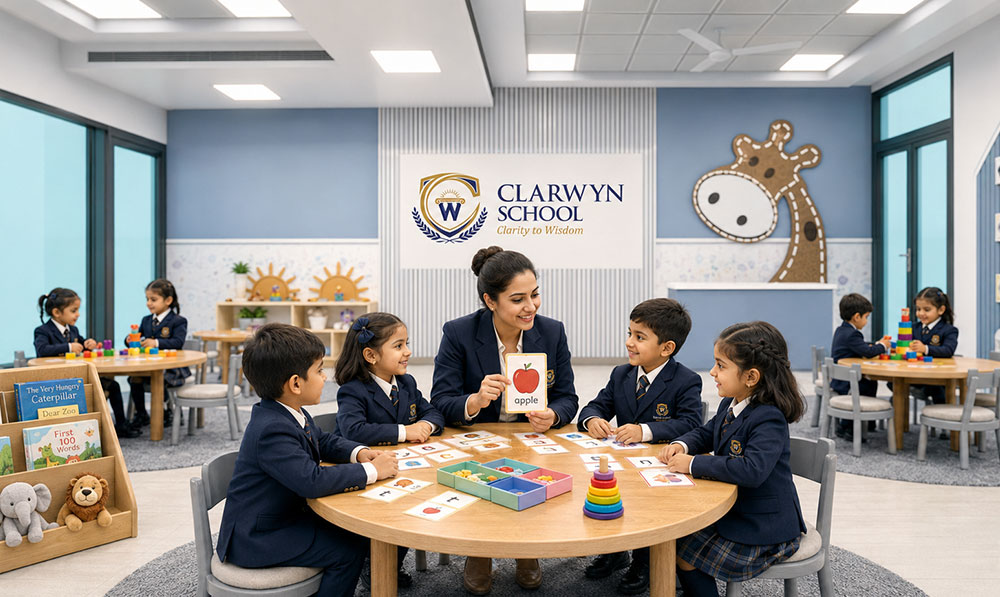
Purposeful Play Is Serious Learning
In the early years, play, language, movement, stories and caring routines form the foundation for later confidence and formal learning.
Play is sometimes treated as the opposite of serious learning. In the early years, that distinction is misleading. Young children build language, attention, movement, imagination, social understanding and early reasoning through experiences that are active, meaningful and connected to the world they know.
The important question is not whether children play. It is whether the environment, materials, adult guidance and routines give that play a developmental purpose.
Purposeful play begins with a clear intention
A construction area can support balance, pattern, shape, planning and collaboration. A role-play corner can develop vocabulary, turn-taking, narrative and understanding of community roles. Water, sand, clay, paint, music and movement can help children compare, predict, represent and communicate.
The activity may feel joyful and open to the child, while the adult has thought carefully about the learning possibilities.
Language is the engine of early learning
Children need rich conversation throughout the day. Adults name objects and actions, extend sentences, introduce stories, invite predictions, revisit experiences and help children express needs and feelings.
Language grows when children have something worth talking about. Play creates that context; attentive adults help turn experience into words, ideas and memory.
“Purposeful play is not time away from learning. It is one of the ways young children make learning their own.”
Teacher-guided and child-active belong together
Child-active learning does not mean the absence of teaching. Young learners benefit from adults who prepare the environment, demonstrate how to use materials, model language, observe closely, ask well-timed questions and step in when support is needed.
Good guidance protects agency without leaving the child unsupported. The adult may begin an invitation, follow the child’s response and then gently extend the challenge.
Movement is part of thinking
Young children learn with their whole bodies. Carrying, balancing, climbing, threading, pouring, sorting, building, dancing and drawing develop coordination while also supporting concentration, planning and independence.
A strong early-years day therefore includes purposeful movement indoors and outdoors, not only long periods of sitting with paper tasks.
|
Five simple home habits that support early learning 1. Read and retell a short story together. 2. Invite your child to sort, count, pour, match or help with a real routine. 3. Ask one open question and allow time for an answer. 4. Offer materials that can be used in more than one way. 5. End with: What did you notice? What would you try next? |
Belonging and routines make exploration possible
Children explore more confidently when the day feels predictable and a trusted adult is nearby. Arrival routines, names, songs, visual cues, meal habits, tidy-up, feelings language and help-seeking are not separate from learning; they create the security that learning requires.
The goal is not instant independence. It is growing independence supported by warm, consistent relationships.
The environment should invite action and care
Child-scale furniture, accessible materials, clear learning zones and visible organisation help children choose, return, repeat and care for shared resources. Different spaces can support stories, making, sensory exploration, quiet attention, movement and social play.
An attractive room is useful only when children can act within it safely and purposefully.
What families can do at home
Parents do not need to recreate a classroom. Simple habits are powerful: read aloud, involve children in everyday routines, offer time to build and draw, talk about what happened, allow manageable choices and resist correcting every attempt too quickly.
The aim is to help children notice, speak, try, persist and think back – while keeping the relationship warm.
|
CLARWYN CONNECTION The Foundation Years at Clarwyn Clarwyn’s Foundation Years are designed to be play-rich, language-rich, teacher-guided, child-active and space-supported. Cambridge Early Years Exposure enriches the foundation-stage context while the Clarwyn Praxis gives adults a clear learning rhythm. Thematic classrooms, role-play spaces, Indoor Soft Play, Splash Pool, Sand Pit, Outdoor Play Park and the Atheneum Junior Area are planned to support stories, movement, sensory exploration, early literacy and numeracy, imagination, relationships and growing independence. The class or mother teacher is the child’s everyday named adult. |
The strongest early foundation is neither hurried academics nor unstructured activity. It is a thoughtful combination of play, language, movement, adult guidance, warm routines and environments that invite children to participate.