
Why Children Need Both Clarity and Curiosity
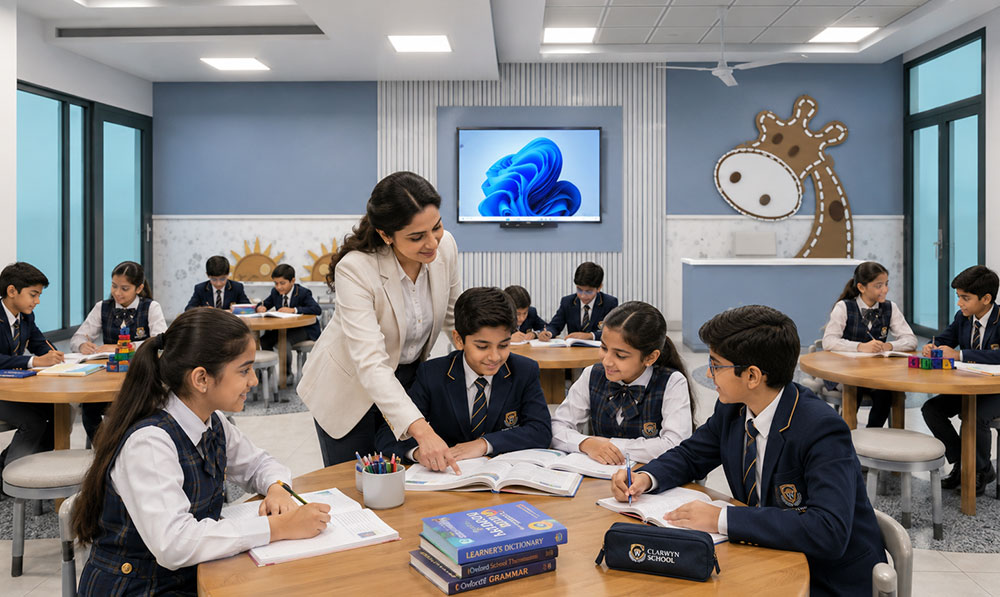
Clear teaching gives children a secure starting point. Purposeful questions help them think beyond the first answer.
Education is often described as a choice between two approaches. One emphasises explanation, knowledge and disciplined practice. The other emphasises questions, discovery and creativity. Children do not need adults to choose one side. They need both.
Clarity without curiosity can become passive. Curiosity without clarity can become confusing. Strong teaching creates a secure starting point and then gives learners meaningful reasons to think, test, connect and create.
Clarity reduces avoidable confusion
Before children can work independently, they need to know what they are learning and what successful work looks like. Clear explanations, examples, vocabulary and models help students focus their effort on the idea itself rather than guessing the task.
Clarity is not the same as making work easy. It means making the purpose, standard and first steps visible so that challenge becomes productive.
Curiosity needs knowledge and direction
Good questions rarely appear from an empty starting point. Children ask better questions when they have encountered ideas, stories, evidence, objects, places and problems worth examining.
A teacher’s role is not to supply every answer or to leave students to discover everything alone. It is to select worthwhile questions, provide enough knowledge, protect subject accuracy and guide learners towards evidence.
“Clarity gives curiosity somewhere to begin. Curiosity gives clarity somewhere to go.”
Practice turns understanding into competence
A student may understand an explanation and still be unable to use it reliably. Reading fluency, calculation, scientific technique, musical performance, writing and movement all improve through deliberate practice.
Practice works best when it includes modelling, short checks, feedback, correction and another attempt. Independence should grow after support, not be demanded before readiness.
Application shows whether learning can travel
A worksheet can show whether a student can repeat a familiar method. Application asks something more: can the learner use the idea in a new problem, investigation, explanation, design, performance or decision?
This is where libraries, laboratories, studios, fieldwork, projects and presentations matter. They create settings in which knowledge must be selected and used, not merely recalled.
|
Five questions that strengthen a learning sequence 1. What must the learner understand? 2. Which question will deepen the idea? 3. What needs guided practice before independence? 4. Where will the learning be used in a new context? 5. What evidence will help the learner reflect and improve? |
Reflection makes improvement visible
Reflection is not a generic statement about enjoying an activity. It is a disciplined look at evidence: What became clearer? Where did I make an error? Which feedback changed my work? What will I refine next?
When children learn to answer these questions honestly, improvement becomes something they can participate in rather than something that is done to them.
The balance changes with age, but the logic remains
A young child may understand through a story, wonder aloud, try with materials, use an idea in play and think back through a drawing or conversation. An older student may study a concept, frame a research question, practise a method, apply it to data and evaluate the result.
The language and level of independence change. The underlying learning journey remains recognisable.
|
CLARWYN CONNECTION How this becomes visible at Clarwyn The Clarwyn Praxis is designed around this balance. Students move through five connected verbs: Understand, Question, Practise, Apply and Reflect. The steps are not forced into equal blocks in every lesson; they guide the complete learning sequence. Within CBSE with Applied Inquiry, clear teaching protects conceptual accuracy while purposeful questions and hands-on application help learning travel into laboratories, the Atheneum Library, studios, projects, presentations and real tasks. |
Children should not have to choose between knowing and wondering. They deserve teaching that helps them understand well, ask wisely, practise carefully, use learning purposefully and improve with evidence.