
Faculty

Clarity
Mastery
Craftsmanship
What you can expect from every teacher
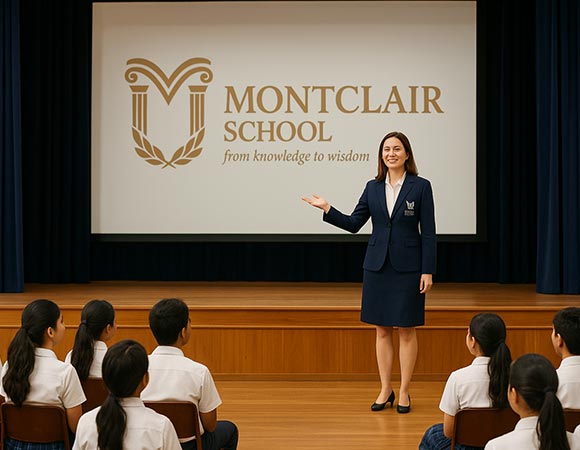
Clarity up front: the day’s success criteria appear first, with a correct example and a ‘near miss’ to define quality. Teachers narrate models so students understand why each step works. Practice starts guided and becomes independent; mini-checks catch slips early, so help arrives quickly.
How we keep quality high (the craft behind the calm)
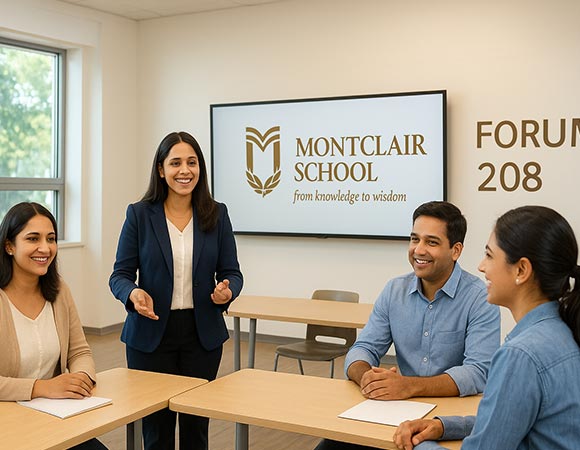
Every teacher receives the Montclair Educator Playbook and co‑plans models, rubrics, and exemplars with colleagues. Weekly learning walks focus on one visible practice—such as narrated modeling or rapid checks—and result in a brief coaching plan. Growth is recognized through micro-credentials and Open Classroom Weeks that share wins publicly.
Why this matters: families see consistency across sections, faster remediation when a concept slips, and transparent grading supported by exemplars and common rubrics.
Coaching Cycle — simple steps
Plan
Co‑plan the lesson with exemplars and success criteria; anticipate misconceptions.
See
A short learning walk or clip focuses on one move; evidence is collected quickly.
Coach
A brief debrief sets one precise target; the teacher rehearses the move.
Share
A micro‑credential is awarded; an Open‑Classroom showcase posts artefacts and invites peers to observe.
Communication you can count on
Start of term: unit outlines with exemplars. During term: notes when reteach or enrichment opens, invitations to clinics or showcases. Before exams: Exam Readiness Notes that describe the candidate journey.
Safety & exam integrity
In labs and studios, safety routines are taught explicitly, including tool care, wearing goggles where required, labeling storage, and clean exits. Digital privacy and consent are part of everyday practice. When public exams run, the Examination Centre & Control Room manage seating, scripts, storage, and live oversight; accommodations are scheduled in advance when eligible.
Where teachers take learning
Atria Library
Teachers book clinics for research and citation so students write with evidence that stands up to questions.
Science Labs
Practical work builds measurement habits and graph‑defended conclusions; teachers model how to plan fair tests and record data clearly.
CodeForge & AI/Robotics
Computing foundations lead to sensors and control. Teachers push for clean documents, organised files, and commented code.
Venture Studio & Engine Room
From sketch to prototype to pitch—teachers guide teams to test ideas, take feedback seriously, and explain value in two minutes.
Pixel Forge & Multimedia
Teachers help students storyboard, shoot, and edit ethical media. Screenings in Forum 208 and the Library gallery make craft and credit visible.
FAQs
A short, focused observation that looks at one visible practice (e.g., narrated modelling or rapid checks). It leads to a 10-minute coaching plan, so improvements are evident in the very next lesson.
Every teacher receives the Educator Playbook, co‑plans models and rubrics with colleagues, and follows the same lesson arc so classrooms feel consistent.
Mini‑checks during lessons trigger same‑day reteach clinics or small‑group follow‑ups. We don’t wait for end‑of‑term results to act.
Start‑of‑term outlines with exemplars; short notes when support or enrichment opens; before exams, Exam Readiness Notes, and the candidate journey.
Through Digital Citizenship modules in CodeForge/AI & Robotics—covering source/cite/share, consent for media, privacy, and healthy tech habits.
Yes. Atria Library enables research and citation integrity; science suites build practical confidence; CodeForge/AI & Robotics and the STEM Activity Bay turn ideas into working builds; Pixel Forge and the Venture Studio support publishing and prototyping.