
Library

Evidence‑based teaching
Calm, well‑lit spaces
Research integrity made practical
What the Library does for learning
The Library builds two habits that change outcomes: reading widely for stamina and joy, and researching ethically with notes you can trust. Younger students enjoy read‑alouds, guided groups, and short book talks that grow voice and choice. Older students book clinics to narrow a topic, keep clean notes, and cite correctly so their arguments stand up to questions.
Membership & After‑School Access
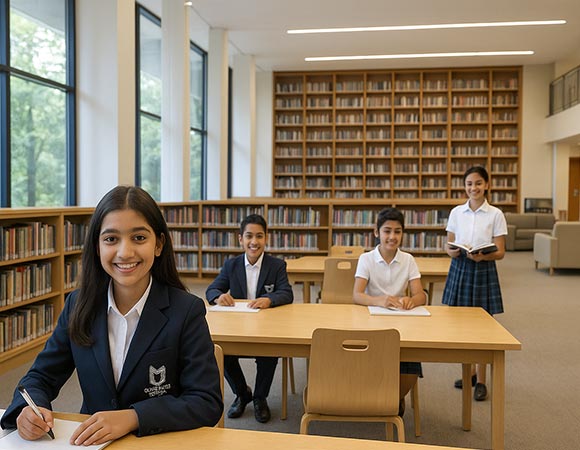
Library membership is available to all students. Once registered, students can use the Atria Library after school for reading and research in a calm, supervised setting. Parents may also use our coworking zone in the Library after school, creating a shared learning environment for families.
Student access after school
Quiet Carrels for deep work, the Seminar Table for group tasks (when available), and open stacks for research.
Parent coworking
Desks, power, and Wi‑Fi in a designated zone; gentle phone etiquette and quiet‑hours signage keep the space calm.
Borrowing
Membership activates borrowing and renewals; ask the desk for holds and due‑date reminders.
Reading programmes by stage (what to expect)
Early Years & Primary
Children move up a gentle ‘reading ladder’—a few more pages, a little richer vocabulary each time. Two‑minute book talks help them explain what they enjoyed in simple, confident sentences. Families get short notes on how to ask questions that open a chapter rather than test it.
Middle
Students try genres and pair non‑fiction with science or social studies units. Stamina goals are visible in diaries, and librarians run quick note‑taking mini‑lessons that directly support classroom writing.
Secondary & Senior
Senior programmes focus on evidence and independence. Research Bootcamp turns a broad topic into a good question, builds a clean note system, and ends with a checked bibliography. Small seminars at the Library table prepare students for viva‑style defenses.
Research Clinic — what happens in 20–30 minutes
- Narrow the question — move from a broad topic to a clear prompt.
- Source triage — skim, keep only what you need, record details as you go.
- Ethical notes — paraphrase properly and mark direct quotes with page numbers.
- Plan the piece — outline sections and match claims to evidence.
- Cite & next steps — format references and leave with two specific actions.
You’ll see a refined question, a source list, a small set of clean notes, an outline, and a citation plan.

Spaces you can visit
The Library is designed for focus and conversation in the right places. Look for these zones when you visit:
- Junior Cove — a story corner with floor seating for read‑alouds and early book choice.
- Quiet Carrels — task‑lit desks that help older students stay with a complex text without distractions.
- Seminar Table — a shared table for small‑group debates, research planning, and extended essays.
- Stacks & Display — new arrivals, student‑curated shelves, and quick picks for busy days.
Parent look‑fors on a library visit
Students choose from a ‘just‑right’ list rather than a random pick.
A librarian modelling skim‑scan and paraphrase with a real article.
Citation cards and quick‑reference posters at the carrels.
FAQs
Yes, with membership.
Yes, after school; please follow quiet‑hour etiquette.
Clinics teach ethical paraphrase and citation, with examples.
Yes, Bootcamp and seminar‑table conferences.