
Labs & Studios

Safety‑first Labs
Publish & Perform
Mentor‑led Prototyping
What parents can expect in every space
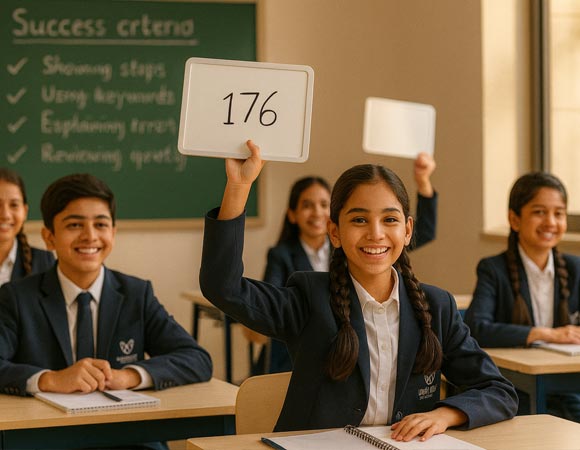
Before any practical work, students see what good looks like and watch a short model. During the task, quick checks enable teachers to intervene or extend support right away. Finished work is visible—lab reports, posters, prototypes, and short films—and students learn how to speak about their decisions.
Safety is routine, not a speech: goggles and gloves where needed, labelled storage, tool hand‑offs, and clean exits after each session.
Science laboratories
- Physics Lab
Students measure, model, and check. They learn how a neat diagram, a clear graph, and a short claim‑and‑evidence paragraph work together to make a conclusion believable. - Chemistry Lab
From separation techniques to reaction rates, students keep disciplined notes and draw labelled diagrams so that another person could repeat the test safely. - Biology Lab
Microscopy and fieldwork teach careful observation. Students keep simple field notebooks and consider the ethics of working with living things. - Composite Science Lab (VI–X)
Younger students build practical confidence with the apparatus before senior specialisation. Assessments include reports and short viva‑style questions to check understanding.

Language & Subject labs
- English Lab
A workshop for fluent reading and clear writing. Students study strong examples, practise short pieces, and speak with poise in small groups. - Mathematics Lab
Students move from drawing to organising to reasoning, then checking their work. Manipulatives, such as algebra tiles, make abstract ideas feel more concrete. - Social Science Lab
Mapwork, timelines, and civic simulations help students effectively use evidence. Research notebooks include sources, data displays, and citations. - Technology Lab & Multimedia Room
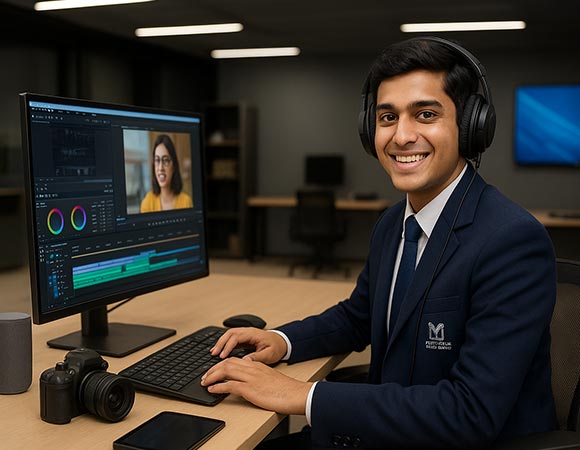
Students move through a simple cycle—brief, plan, make, critique, publish. Podcasting and voice work build clarity and confidence.
Innovation, STEM & Computing
- Montclair Venture Studio
Students choose a real problem, sketch ideas, and build a simple prototype. After testing with users, they improve the design and share a two‑minute pitch with a working demo. - AI & Robotics / CodeForge
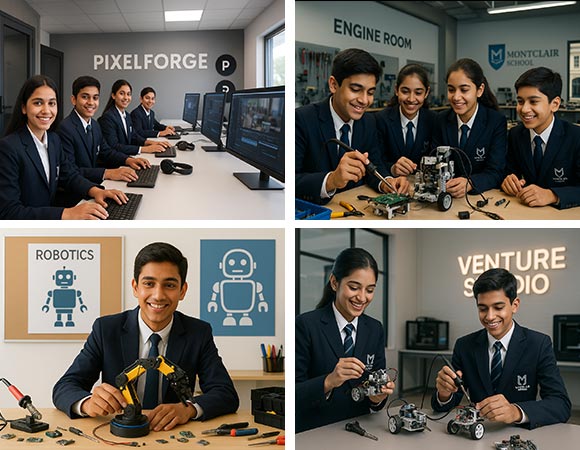
Age‑graded pathways move from block logic to text‑based control. Students practise safe cloud habits and produce demos with commented code that another student can understand. - Engine Room
Electronics benches and mechanism stations teach the careful use of tools and problem-solving skills. Students keep logbooks, fix failures, and retest until the model works reliably. - STEM Activity Bay
Approachable builds—lights, sensors, and simple alarms—help students practise diagrams, parts lists, and tidy wiring before they take on larger projects. - STEM Computer Lab
A structured environment for computing practice and document craft. Skills built here support work in every subject.
Creative Media & Performing Studios
- Pixel Forge (Film & Photography)
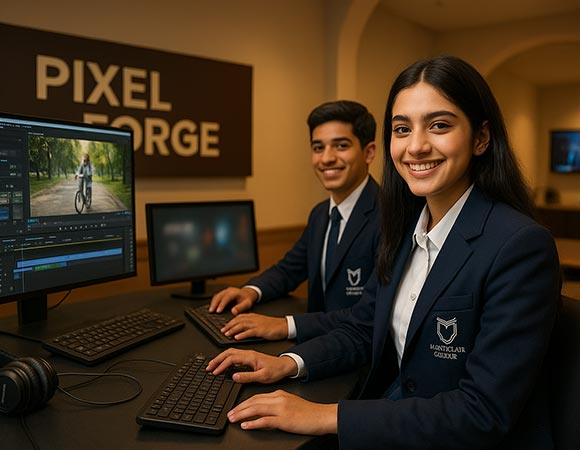
Students learn framing, light, sound, and editing, then publish short explainers and photo essays with proper credit and permissions. Screenings in Forum 208 teach audience etiquette. - Multimedia Room (Podcast/AV)
A quiet room for recording and editing voice. Students practise clear speech, script discipline, and respectful listening. - Recording Studio
Supervised sessions for high‑quality audio capture used in films, podcasts, and performances. Students learn how to handle microphones and levels responsibly. - Art Gallery
A rotating display of student work that celebrates process as well as product. Captions explain the brief, the materials, and what the artist changed along the way.
Art & Craft labs
- Canvas Painting Lab
Students work on canvas with acrylics, oils, or watercolours. They learn how to prepare a surface, mix colours, and use brushes purposefully. Exhibition pieces include a short note on the idea behind the work and the techniques used. - Large‑Scale Drawing & Calligraphy Lab
Here, students practise bold, confident lines on posters and charts, and learn lettering that is clear from a distance. Projects often support school events and exhibitions, teaching design choices such as layout and hierarchy. - Pottery & Sculpture Room
Clay modelling and sculpture introduce form and structure. Students learn how pieces are built to last and how firing or finishing changes a design. - Visual Art & Digital Design Lab
Traditional drawing meets digital tools. Students sketch by hand, then move to tablets or design software to create posters, simple animations, or brand elements—always respecting image rights. - Mixed Media & Craft Lab
This is the ‘try it and test it’ space—textiles, recycled materials, and experimental techniques. Students plan, build, and refine, then write a short reflection about what they changed and why.
Performing Arts spaces
- Indian Music Room
Students practise classical and folk forms, focusing on listening, rhythm, and respectful ensemble work. - Western Music & Vocal Room
Vocal warm‑ups and ensemble pieces build confidence and stage presence. Students prepare short performances throughout the year. - Piano Room
Individual and small‑group practice with attention to posture, timing, and expression. Simple recitals help students share progress. - Theatre / Forum 208
A flexible performance forum for screenings, debates, and shows. Students practise the craft of presenting: voice, timing, and audience care.
Sports & Activities (quick reference)
Families often ask where practice happens. These are the spaces students use across the year:
- Outdoor
Football Ground, Cricket Pitch, Basketball Court, Tennis Court, Volleyball Court, Running Track. - Indoor
Archery and Air‑Rifle Ranges, Squash Court, Table‑Tennis Area, Boxing & Wrestling zones, Gym & Treadmill, Billiards. - Movement & Wellness
Skating Rink / Prayer Area, Yoga & Meditation Center with Dance Hall, Swimming Pool, Badminton Court. - Juniors
Kids’ Play Area with slides, see‑saws, merry‑go‑round, and sand pit.

Safety, routines & assessment
Safety routines are taught through demonstration and practice. Students sign tools in and out, wear protective gear when required, and close benches down neatly. Assessment focuses on evidence: clear diagrams and notes, working models, short viva‑style questions, and—where appropriate—public showcases.