
Methodology & Learning Styles

Clarity
Mastery
Craftsmanship
At a glance — what families can expect every lesson
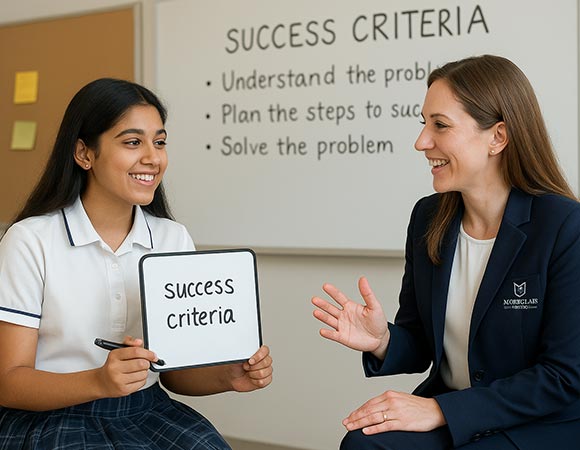
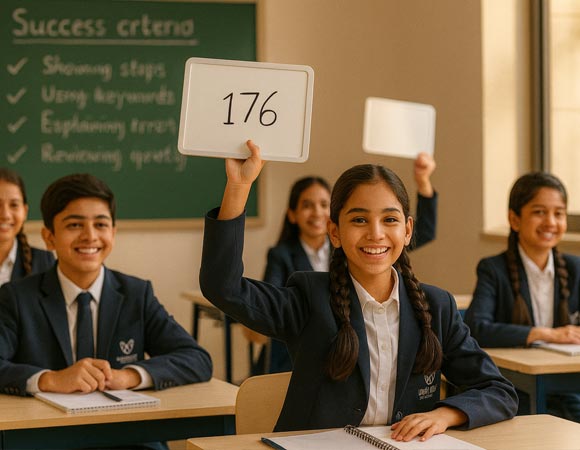
Clarity comes first. Teachers post the day’s success criteria and show both a correct example and a ‘near miss’ so students know the target and the traps. Practice is initially guided and then becomes independent, with sufficient time and quiet for everyone to try properly. Short checks (mini‑boards, exit slips) tell the teacher who needs a same‑day clinic and who is ready to extend.
Calm, courteous routines lower anxiety: predictable starts, quiet transitions, materials ready, and clear hand‑ins.
The Montclair Lesson Arc — explained for families
Activate
Two minutes of retrieval + one hinge question. Students ‘wake up’ prior knowledge and see the day’s success criteria up front.
Explain
Short, plain‑language teaching. We define boundaries with a worked example and a useful non‑example.
Model
The teacher narrates expert moves (where to check a unit, how to test a claim) so students can copy the method with purpose.
Practise
Together, then independently. Tasks are ‘thin‑sliced’, so early wins build confidence before the stretch items.
Check
Quick scans catch slips while there’s still time to help. Below‑threshold items trigger same‑day reteach clinics.
Extend
When secure, students apply or publish: a paragraph, a lab, a prototype, or a short video.
How help arrives (support & stretch without labels)
Evidence from the lesson—not labels—drives decisions. If a concept slips, students receive a brief reteach on the same day or the next lesson. If secure, they choose an extension: a Library research clinic, a Robotics/CodeForge build, a Venture Studio sprint, or an explainer made in Pixel Forge.
Inclusion & wellbeing (access to challenge for everyone)
We write success criteria in plain language and provide model answers. Sentence frames and organisers fade as confidence grows. Students can show learning in different ways—diagram, demo, write‑up, or short film—held to the same quality bar. Digital citizenship (source, cite, share; privacy & consent) is practised wherever work is published.
Where learning comes to life
Atria Library — reading stamina and honest research
This is the place for calm, focused work. Librarians help students narrow a question, keep ethical notes, and cite sources correctly. Primary readers build stamina with read‑alouds and ladders; seniors prepare for seminar‑table discussions and extended essays.
Science laboratories — from careful tests to graph‑defended claims
Students learn to plan fair tests, measure carefully, and present results clearly. A neat diagram, a labelled graph, and a short claim‑and‑evidence paragraph work together so that the conclusions are believable.
Technology & Engineering — CodeForge, AI & Robotics, STEM Activity Bay, Engine Room
Computing foundations lead to sensors and control, then to mechanisms and reliable builds. Students organise files, code small behaviours, wire circuits, and strengthen joints—finishing with a demo or a tested model they can explain.
Creative Media — Pixel Forge & Multimedia Room
Students learn framing, light, sound, and editing to tell short, ethical stories. Screenings and galleries teach how to share work respectfully and credit every asset used.
Innovation — Venture Studio
Students interview users, sketch, prototype, and test. They present two‑minute pitches with a working demo and a simple cost sheet—experience that builds confidence without hype.
The Montclair Lesson Arc — explained for families
Success criteria and an example visible before practice
Teacher narrating a model, then students rehearsing the steps
Mini‑checks that trigger help the same day
Calm transitions and tidy, labelled materials
FAQs
Teachers post success criteria first, then show a correct example and a non‑example. We model the thinking aloud so students know the steps before they try.
Mini‑whiteboards and exit tickets flag slips during the lesson. If a concept needs reteaching, we offer same-day or next-lesson clinics.
Once core criteria are secure, students choose extension paths—Atria Library research clinics, Robotics/AI builds in CodeForge, Venture Studio sprints, or short explainers in Pixel Forge.
It’s move‑based and specific, e.g., “Add a unit check in step 3.” For longer work, we use simple peer stems (Two Stars & a Wish) and a short edit plan.
Primary: brief retrieval and reading. Middle: thin‑sliced sets and note systems. Secondary & Senior: reading/writing plans, data analysis, or research/prototype logs.
Yes. Tool‑care briefings, goggles where required, labelled storage, and clean exits are taught explicitly. Safety routines are part of learning, not an afterthought.